
ความสัมพันธ์ระหว่างการแสวงหาความตื่นเต้นเร้าใจ ความคาดหวัง แรงจูงใจกับการดื่มเครื่องดื่มแอลกอฮอล์ของนักเรียนมัธยมศึกษาในโรงเรียนแห่งหนึ่ง อำเภอฝาง จังหวัดเชียงใหม่
คำสำคัญ:
การแสวงหาความตื่นเต้นเร้าใจ, ความคาดหวัง, แรงจูงใจบทคัดย่อ
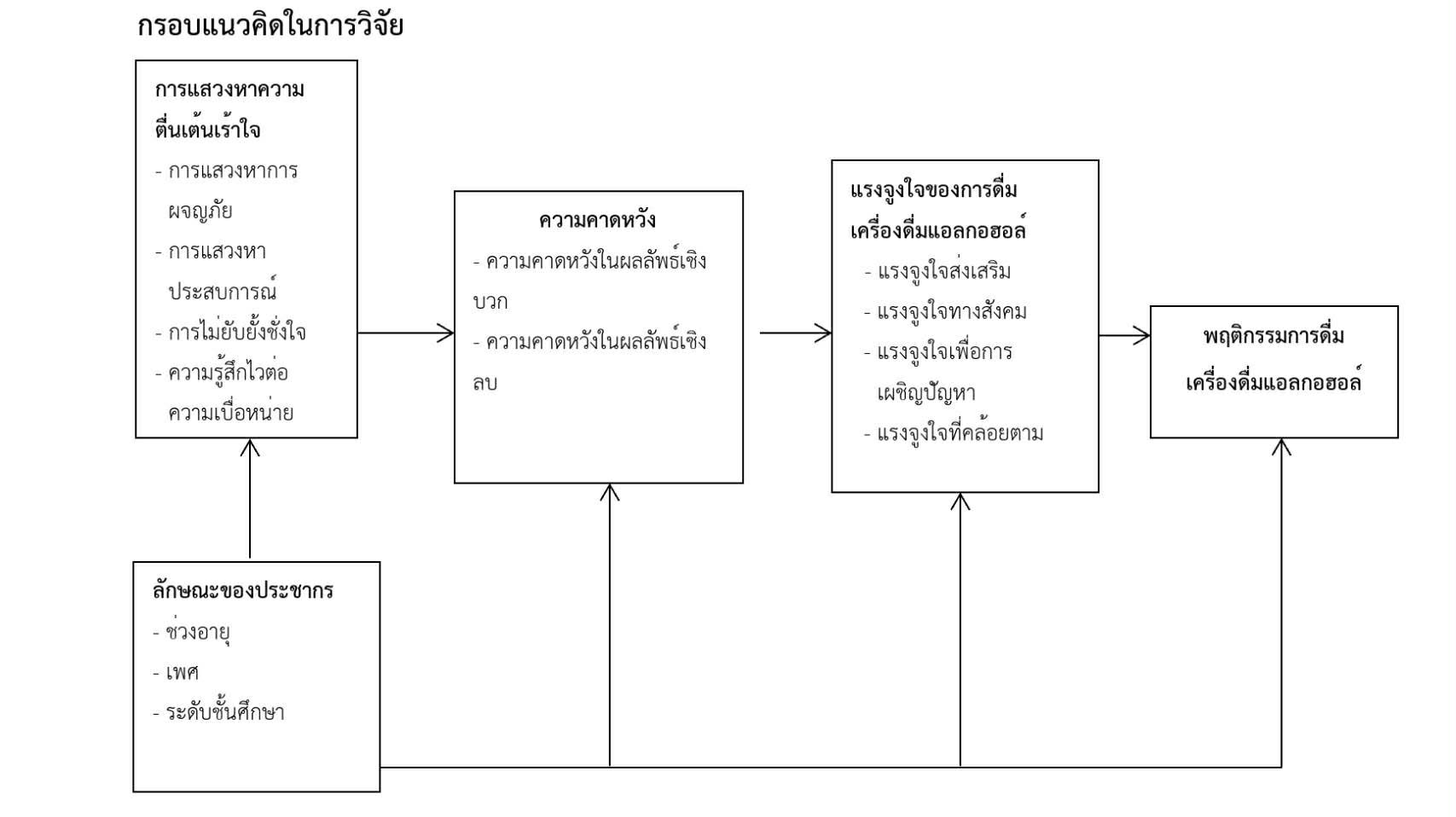
การวิจัยนี้ศึกษาความสัมพันธ์ระหว่างการแสวงหาความตื่นเต้นเร้าใจ ความคาดหวัง แรงจูงใจ และพฤติกรรมการดื่มเครื่องดื่มแอลกอฮอล์ของนักเรียนมัธยมศึกษาในอำเภอฝาง จังหวัดเชียงใหม่ มีวัตถุประสงค์เพื่ออธิบายลักษณะของปัจจัยดังกล่าว และศึกษาความสัมพันธ์ระหว่างกัน การวิจัยเป็นแบบสหสัมพันธ์ ใช้แบบสอบถามเก็บข้อมูลจากกลุ่มตัวอย่าง 267 คน วิเคราะห์ข้อมูลด้วยสถิติเชิงพรรณนาและสหสัมพันธ์ Spearman ที่ระดับนัยสำคัญ 0.05
ผลการวิจัยพบว่า นักเรียนที่มีพฤติกรรมการดื่ม ร้อยละ 61.80 เคยดื่ม โดยเพศหญิงดื่มมากกว่าเพศชาย ส่วนใหญ่เริ่มดื่มหลังอายุ 15 ปี เหตุผลหลักคืออยากรู้รสชาติ เครื่องดื่มที่นิยมคือเบียร์ ดื่มในช่วงกลางคืน มักได้รับจากพ่อแม่ ญาติ หรือเพื่อน และดื่มร่วมกับครอบครัวหรือเพื่อนรุ่นเดียวกัน ผลการวิเคราะห์ความสัมพันธ์พบว่า การแสวงหาความตื่นเต้นเร้าใจมีความสัมพันธ์กับความคาดหวัง แรงจูงใจ และพฤติกรรมการดื่มอย่างมีนัยสำคัญที่ระดับ (p<0.01) และสัมพันธ์กับเพศที่ระดับ (p<0.05) โดยผู้ที่มีระดับความตื่นเต้นเร้าใจสูง โดยเฉพาะด้านการไม่ยับยั้งชั่งใจและความไวต่อความเบื่อหน่าย มีแนวโน้มที่จะมีแรงจูงใจส่งเสริมและแรงจูงใจทางสังคมสูงขึ้น รวมทั้งมีความคาดหวังผลลัพธ์เชิงบวกจากการดื่ม ในขณะที่การแสวงหาการผจญภัยพบความสัมพันธ์เชิงลบกับเพศ นอกจากนี้แรงจูงใจเพื่อการเผชิญปัญหาและแรงจูงใจคล้อยตามมีความสัมพันธ์เชิงลบกับความคาดหวังผลลัพธ์เชิงบวกและพฤติกรรมการดื่ม
ผลลัพธ์ชี้ให้เห็นว่าการลดการดื่มของนักดื่มหน้าใหม่จำเป็นต้องวางแผนทั้งเชิงนโยบายและปฏิบัติการ โดยอาศัยความร่วมมือจากทุกภาคส่วน เสริมสร้างครอบครัวที่เข้มแข็ง พัฒนาคุณภาพชีวิต และกำหนดมาตรการป้องกันที่สอดคล้องกับสภาพสังคมปัจจุบัน
เอกสารอ้างอิง
ขวัญธิดา พิมพการ, กฤษดา ทองทับ, หทัยชนก เผ่าวิริยะ, วุฒิพงษ์ เชื่อมนอก และภาวิดา ภูมิลุน. (2566). แรงจูงใจ ทัศนคติและพฤติกรรมการดื่มเครื่องดื่มแอลกอฮอล์ของนักศึกษามหาวิทยาลัยแห่งหนึ่ง. วารสารการวัดผลการศึกษา สำนักทดสอบทางการศึกษาและจิตวิทยา, 40(108), 1–15. https://so06.tci-thaijo.org/index.php/JEMEPTB/article/view/270004
ดาวรุ่ง ฟักทอง และวงศ์ลัดดา วีระไพบูลย์. (2566). ประสบการณ์การตั้งแคมป์ที่ส่งผลต่อความภักดีของจุดหมายปลายทางของนักท่องเที่ยว: บทบาทตัวแปรส่งผ่านของการแสวงหาความแปลกใหม่และความสนุกสนาน. วารสารบริหารธุรกิจและบัญชี มหาวิทยาลัยขอนแก่น, 7(1), 18–35. https://so04.tci-thaijo.org/index.php/kkbsjournal/article/view/255450
ทรงเกียรติ ปิยะกะ, ชาญวิทย์ เงินศรีตระกูล และสาวิตรี อัษณางค์กรชัย. (2545). เวชศาสตร์โรคติดยา: คู่มือสำหรับบุคลากรทางการแพทย์ (พิมพ์ครั้งที่ 2). สงขลา: คณะแพทยศาสตร์ มหาวิทยาลัยสงขลานครินทร์.
พรพิมล บัวสมบูรณ์. (2550). ปัจจัยที่มีผลต่อการดื่มแอลกอฮอล์ของนักเรียนอาชีวศึกษา กรุงเทพมหานคร (วิทยานิพนธ์ปริญญาดุษฎีบัณฑิต, จุฬาลงกรณ์มหาวิทยาลัย). https://doi.org/10.14457/CU.the.2007.1406
บุรินทรวรวิทย์ พ่วนอุ๋ย, อนุชิต บูรณพันธ์ และมัทนา วังถนอมศักดิ์. (2565). แรงจูงใจในการทำงานในยุคดิจิทัลใหม่. วารสารวิชาการสถาบันพัฒนาพระภิกษุสงฆ์, 5(4), 1–15. https://so06.tci-thaijo.org/index.php/tmd/article/view/259705
ปัญจพร ศรีชนาพันธ์, ดารารัตน์ ธาตุรักษ์, วันไชย คำเสน, วิรยะ เดชแสง, ณัฐนรี ทองดีพันธ์, วันวิสาข์ ชูจิตร และกิตติ ศรีอาวัชนาการ. (2563). ปัจจัยต้นเหตุ พฤติกรรมเสี่ยง และแรงจูงใจที่ส่งผลให้เกิดการดื่มเครื่องดื่มแอลกอฮอล์ของประชาชนในเขตภาคเหนือตอนบน. วารสารมหาวิทยาลัยราชภัฏลำปาง, 9(2), 26–41. https://so04.tci-thaijo.org/index.php/JLPRU/article/view/241086
พระธีรสิทธิ สิริสุวณฺโณ (ไชยชนะ), ธนกฤษ สมบุญ, เขมณัฏฐ์ ไพรพนาเวศ และอัญชลี แสงเพชร. (2568). ปัจจัยที่มีผลต่อการดื่มแอลกอฮอล์ของนักศึกษา ชั้นปีที่ 3 สาขาวิชาการปกครอง มหาวิทยาลัยมหามกุฏราชวิทยาลัย วิทยาเขตล้านนา. พระพุทธศาสนากับปัญญาประดิษฐ์, 2(1), 127–139. https://firstojs.com/index.php/MBU/article/view/1552
พิมพ์พิสาข์ จอมศรี, มัลลิกา มาตระกูล, วิชยา เห็นแก้ว และสุนทรี สุรัตน์. (2568). ความสัมพันธ์ระหว่างความคาดหวังผลลัพธ์จากการดื่มแอลกอฮอล์กับพฤติกรรมการดื่มแอลกอฮอล์ของวัยรุ่นชนชาติพันธุ์. วารสารการพยาบาล วิทยาศาสตร์สุขภาพและการศึกษา, 1(1), 12–26. https://he05.tci-thaijo.org/index.php/JNHSE/article/view/4128
ภัทรวิมล โสนะชัย และเบญญาพัชร์ วันทอง. (2568). การศึกษาพฤติกรรมการบริโภคเครื่องดื่มแอลกอฮอล์ของนักศึกษาคณะครุศาสตร์ มหาวิทยาลัยราชภัฏพิบูลสงคราม. วารสารสังคมศึกษาปริทรรศน์, 1(3), 54–66. https://doi.org/10.64186/jsp1583
ยงยุทธ์ ยั่งยืน. (2552). ความสัมพันธ์ระหว่างการแสวงหาความตื่นเต้นเร้าใจและแรงจูงใจกับการดื่มเครื่องดื่มที่มีแอลกอฮอล์ของนักเรียนมัธยมศึกษาในจังหวัดเชียงใหม่ (การค้นคว้าอิสระปริญญามหาบัณฑิต, มหาวิทยาลัยเชียงใหม่). https://cmudc.library.cmu.ac.th/frontend/Info/item/dc:112166
รุจาภา จิระประดิษฐ์ผล, มณฑา ลิ้มทองกุล และทิฆัมพร มัจฉาชีพ. (2563). อิทธิพลของครอบครัวต่อการป้องกันนักดื่มหน้าใหม่ในวัยรุ่น. วารสารวิจัยราชภัฏพระนคร, 33(1), 77–88. https://so05.tci-thaijo.org/index.php/stouj/article/view/210808
ศูนย์วิจัยปัญหาสุรา. (2568). สถานการณ์การดื่มแอลกอฮอล์ในประเทศไทย 2564 VS 2567 [รายงานออนไลน์]. https://cas.or.th/content?id=934
ศิวนาถ จุ่มน้ำใส. (2567). การพัฒนาอย่างยั่งยืนของประเทศไทย: ความคาดหวังและความพึงพอใจของคนไทย Generation Z ต่อนโยบาย Thailand Soft Power (วิทยานิพนธ์ปริญญาดุษฎีบัณฑิต, สถาบันบัณฑิตพัฒนบริหารศาสตร์). http://uctalservice.walai.net/catalog/BibItem.aspx?BibID=b03617008
สาวิตรี อัษณางค์กรชัย. (2564). รายงานสถานการณ์การบริโภคเครื่องดื่มแอลกอฮอล์ในสังคมไทย ประจำปี 2564 (พิมพ์ครั้งที่ 1). นนทบุรี: ศูนย์วิจัยปัญหาสุรา. https://cas.or.th/content?id=18
สำนักงานสถิติแห่งชาติ กระทรวงดิจิทัลเพื่อเศรษฐกิจและสังคม. (2567). การสำรวจสถานการณ์การสูบบุหรี่และการดื่มเครื่องดื่มที่มีแอลกอฮอล์ของประชาชน พ.ศ. 2567. (รายงาน).https://www.nso.go.th/nsoweb/storage/survey_detail/2025/20250401100215_15169.pdf
สุจิตตา ฤทธิ์มนตรี, โสภิดา ดาวสดใส, ขวัญสุดา บุญทศ และศริญญาชาญสุข. (2566). ผลกระทบจากการบริโภคเครื่องดื่มแอลกอฮอล์ของผู้อื่นตามการรับรู้ของเหยื่อ. การแพทย์โรงพยาบาลอุดรธานี, 31(1). https://he02.tci-thaijo.org/index.php/udhhosmj/article/view/262750/179254
Baines, L., Jones, A., & Christiansen, P. (2016). Hopelessness and alcohol use: The mediating role of drinking motives and outcome expectancies. Addictive Behaviors Reports, 4, 65–69. https://doi.org/10.1016/j.abrep.2016.11.001
Baltariu, I. C., Enea, V., de Jong, P. J., & van het Rot, M. (2024). Associations between alcohol consumption and empathy in a non-clinical sample. Scientific Reports, 14(1), 10842. https://doi.org/10.1038/s41598-024-59233-x
Deng, X., & Zhang, L. (2020). Neural underpinnings of sensation seeking and emotion regulation. International Journal of Psychology, 55(5), 851–860. https://doi.org/10.1002/ijop.12649
Igra, V., & Irwin, C. E., Jr. (1996). Theories of adolescent risk-taking behavior. In R. J. DiClemente et al. (Eds.), Handbook of adolescent health risk behavior (pp. 35–51). Plenum Press. https://doi.org/10.1007/978-1-4899-0203-0_3
Jang, C.-Y., et al. (2025). Parent–youth relationships and youth alcohol use. International Journal of Mental Health and Addiction, 23, 1421–1433. https://doi.org/10.1007/s11469-023-01177-w
Novabizz. (2022). ทฤษฎีและแนวคิดเกี่ยวกับความคาดหวัง. สืบค้นเมื่อ 30 ธันวาคม 2568 จาก https://www.novabizz.com/NovaAce/Behavior/Expectancy_Theory.htm
Oei, T. P. S., & Baldwin, A. R. (1994). Expectancy theory. Journal of Studies on Alcohol, 55(5), 525–534. https://doi.org/10.15288/jsa.1994.55.525
ดาวน์โหลด
เผยแพร่แล้ว
รูปแบบการอ้างอิง
ฉบับ
ประเภทบทความ
สัญญาอนุญาต
ลิขสิทธิ์ (c) 2025 วารสารการส่งเสริมสุขภาพและอนามัยสิ่งแวดล้อม ศูนย์อนามัยที 8 อุดรธานี

อนุญาตภายใต้เงื่อนไข Creative Commons Attribution-NonCommercial-NoDerivatives 4.0 International License.
บทความในวารสารนี้มีลิขสิทธิ์โดยและเผยแพร่ภายใต้สัญญาอนุญาต Creative Commons แบบแสดงที่มา-ไม่ใช้เพื่อการค้า-ไม่ดัดแปลง 4.0 ระหว่างประเทศ (CC BY-NC-ND 4.0)
สามารถอ่านและนำไปใช้เพื่อวัตถุประสงค์ทางวิชาการ เช่น การสอน การวิจัย หรือการอ้างอิง โดยให้เครดิตแก่ผู้เขียนและวารสารอย่างเหมาะสม
ห้ามใช้หรือดัดแปลงบทความโดยไม่ได้รับอนุญาต
ข้อความที่ปรากฏในบทความเป็นความคิดเห็นของผู้เขียนแต่เพียงผู้เดียว
ผู้เขียนต้องรับผิดชอบต่อเนื้อหาและความถูกต้องของบทความของตนทั้งหมด
การนำไปใช้ซ้ำหรือเผยแพร่ซ้ำในรูปแบบอื่นต้องได้รับอนุญาตจากวารสาร



