
The Relationship between Sensation Seeking, Alcohol Expectation, Motivation on Alcohol Consumption among High School Students in Fang District, Chiang Mai Province
Keywords:
Sensation seeking , Alcohol Expectancies (AE), Drinking MotivesAbstract
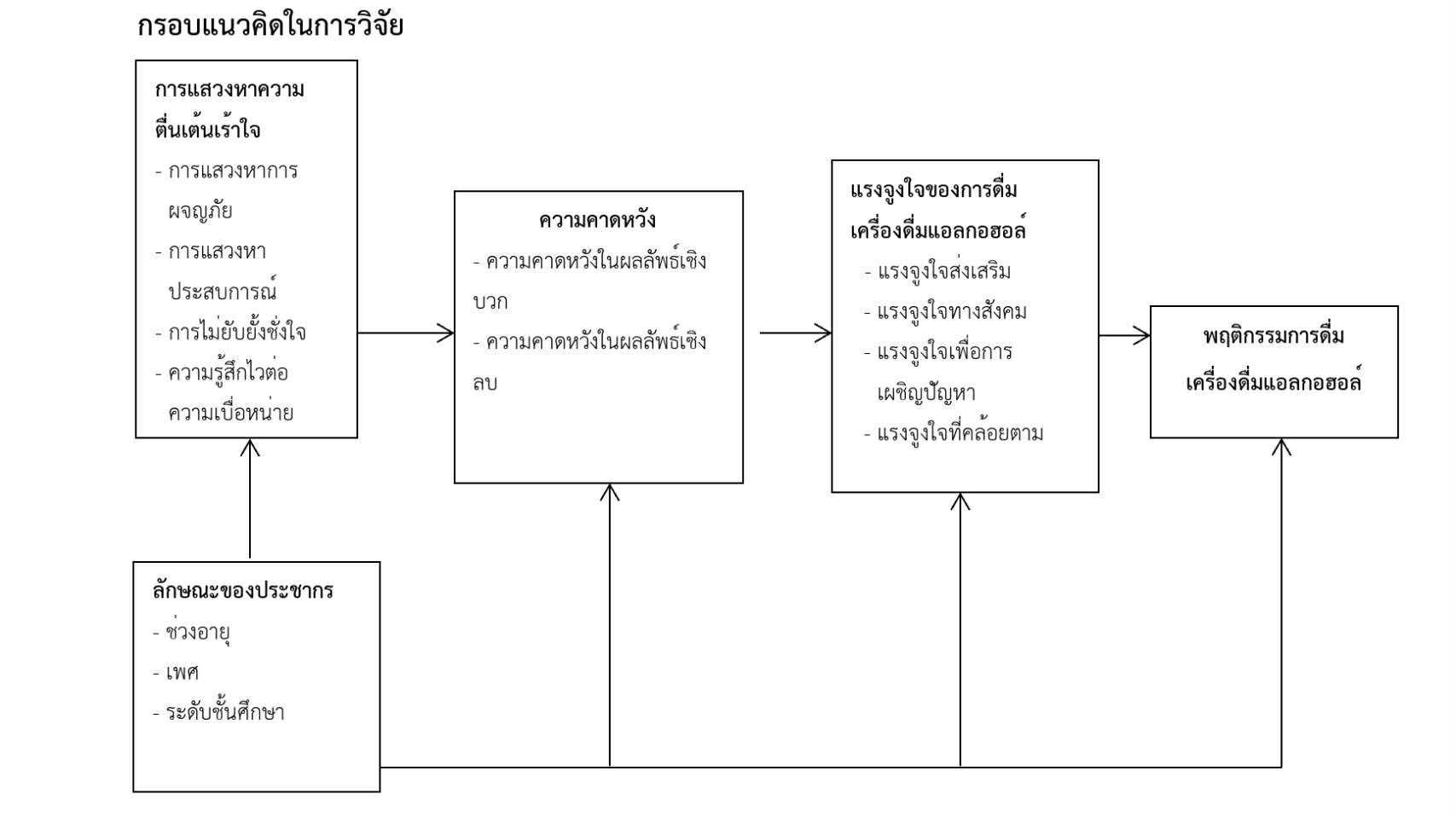
This study examined the associations among sensation seeking, alcohol-related outcome expectancies, drinking motivations, and alcohol consumption behaviors among secondary school students in Fang District, Chiang Mai Province. The research aimed to describe these psychosocial determinants and to analyze their interrelationships. A correlational design was employed using self-administered questionnaires collected from 267 participants. Data were analyzed using descriptive statistics and Spearman’s rank correlation at a significance level of 0.05.
The results indicated that 61.80 percent of students who exhibited drinking behavior had previously consumed alcohol, with female students reporting higher drinking rates than males. Most students began drinking after age 15, mainly due to curiosity about taste. Beer was the most commonly consumed beverage, typically consumed at night. Alcohol was often obtained from parents, relatives, or friends and was usually consumed with family members or peers of the same age. Correlation analysis revealed that thrill seeking was significantly associated with expectations, motivation, and drinking behavior at the p < 0.01 level, and significantly associated with gender at the p < 0.05 level. Students with high levels of thrill seeking—particularly in impulsivity and boredom sensitivity—tended to exhibit stronger promotion and social motivations, along with more positive outcome expectations related to drinking. Conversely, adventure seeking was negatively associated with gender. While coping and conformity motivation were negatively associated with positive expectations and drinking behavior.
These findings underscore the need for comprehensive, multi-level strategies to mitigate early alcohol use among adolescents. Effective interventions should incorporate policy-level measures, community engagement, and family-strengthening approaches. Enhancing overall quality of life and developing contextually relevant prevention frameworks are also essential to addressing the evolving social landscape that shapes youth drinking behaviors.
References
ขวัญธิดา พิมพการ, กฤษดา ทองทับ, หทัยชนก เผ่าวิริยะ, วุฒิพงษ์ เชื่อมนอก และภาวิดา ภูมิลุน. (2566). แรงจูงใจ ทัศนคติและพฤติกรรมการดื่มเครื่องดื่มแอลกอฮอล์ของนักศึกษามหาวิทยาลัยแห่งหนึ่ง. วารสารการวัดผลการศึกษา สำนักทดสอบทางการศึกษาและจิตวิทยา, 40(108), 1–15. https://so06.tci-thaijo.org/index.php/JEMEPTB/article/view/270004
ดาวรุ่ง ฟักทอง และวงศ์ลัดดา วีระไพบูลย์. (2566). ประสบการณ์การตั้งแคมป์ที่ส่งผลต่อความภักดีของจุดหมายปลายทางของนักท่องเที่ยว: บทบาทตัวแปรส่งผ่านของการแสวงหาความแปลกใหม่และความสนุกสนาน. วารสารบริหารธุรกิจและบัญชี มหาวิทยาลัยขอนแก่น, 7(1), 18–35. https://so04.tci-thaijo.org/index.php/kkbsjournal/article/view/255450
ทรงเกียรติ ปิยะกะ, ชาญวิทย์ เงินศรีตระกูล และสาวิตรี อัษณางค์กรชัย. (2545). เวชศาสตร์โรคติดยา: คู่มือสำหรับบุคลากรทางการแพทย์ (พิมพ์ครั้งที่ 2). สงขลา: คณะแพทยศาสตร์ มหาวิทยาลัยสงขลานครินทร์.
พรพิมล บัวสมบูรณ์. (2550). ปัจจัยที่มีผลต่อการดื่มแอลกอฮอล์ของนักเรียนอาชีวศึกษา กรุงเทพมหานคร (วิทยานิพนธ์ปริญญาดุษฎีบัณฑิต, จุฬาลงกรณ์มหาวิทยาลัย). https://doi.org/10.14457/CU.the.2007.1406
บุรินทรวรวิทย์ พ่วนอุ๋ย, อนุชิต บูรณพันธ์ และมัทนา วังถนอมศักดิ์. (2565). แรงจูงใจในการทำงานในยุคดิจิทัลใหม่. วารสารวิชาการสถาบันพัฒนาพระภิกษุสงฆ์, 5(4), 1–15. https://so06.tci-thaijo.org/index.php/tmd/article/view/259705
ปัญจพร ศรีชนาพันธ์, ดารารัตน์ ธาตุรักษ์, วันไชย คำเสน, วิรยะ เดชแสง, ณัฐนรี ทองดีพันธ์, วันวิสาข์ ชูจิตร และกิตติ ศรีอาวัชนาการ. (2563). ปัจจัยต้นเหตุ พฤติกรรมเสี่ยง และแรงจูงใจที่ส่งผลให้เกิดการดื่มเครื่องดื่มแอลกอฮอล์ของประชาชนในเขตภาคเหนือตอนบน. วารสารมหาวิทยาลัยราชภัฏลำปาง, 9(2), 26–41. https://so04.tci-thaijo.org/index.php/JLPRU/article/view/241086
พระธีรสิทธิ สิริสุวณฺโณ (ไชยชนะ), ธนกฤษ สมบุญ, เขมณัฏฐ์ ไพรพนาเวศ และอัญชลี แสงเพชร. (2568). ปัจจัยที่มีผลต่อการดื่มแอลกอฮอล์ของนักศึกษา ชั้นปีที่ 3 สาขาวิชาการปกครอง มหาวิทยาลัยมหามกุฏราชวิทยาลัย วิทยาเขตล้านนา. พระพุทธศาสนากับปัญญาประดิษฐ์, 2(1), 127–139. https://firstojs.com/index.php/MBU/article/view/1552
พิมพ์พิสาข์ จอมศรี, มัลลิกา มาตระกูล, วิชยา เห็นแก้ว และสุนทรี สุรัตน์. (2568). ความสัมพันธ์ระหว่างความคาดหวังผลลัพธ์จากการดื่มแอลกอฮอล์กับพฤติกรรมการดื่มแอลกอฮอล์ของวัยรุ่นชนชาติพันธุ์. วารสารการพยาบาล วิทยาศาสตร์สุขภาพและการศึกษา, 1(1), 12–26. https://he05.tci-thaijo.org/index.php/JNHSE/article/view/4128
ภัทรวิมล โสนะชัย และเบญญาพัชร์ วันทอง. (2568). การศึกษาพฤติกรรมการบริโภคเครื่องดื่มแอลกอฮอล์ของนักศึกษาคณะครุศาสตร์ มหาวิทยาลัยราชภัฏพิบูลสงคราม. วารสารสังคมศึกษาปริทรรศน์, 1(3), 54–66. https://doi.org/10.64186/jsp1583
ยงยุทธ์ ยั่งยืน. (2552). ความสัมพันธ์ระหว่างการแสวงหาความตื่นเต้นเร้าใจและแรงจูงใจกับการดื่มเครื่องดื่มที่มีแอลกอฮอล์ของนักเรียนมัธยมศึกษาในจังหวัดเชียงใหม่ (การค้นคว้าอิสระปริญญามหาบัณฑิต, มหาวิทยาลัยเชียงใหม่). https://cmudc.library.cmu.ac.th/frontend/Info/item/dc:112166
รุจาภา จิระประดิษฐ์ผล, มณฑา ลิ้มทองกุล และทิฆัมพร มัจฉาชีพ. (2563). อิทธิพลของครอบครัวต่อการป้องกันนักดื่มหน้าใหม่ในวัยรุ่น. วารสารวิจัยราชภัฏพระนคร, 33(1), 77–88. https://so05.tci-thaijo.org/index.php/stouj/article/view/210808
ศูนย์วิจัยปัญหาสุรา. (2568). สถานการณ์การดื่มแอลกอฮอล์ในประเทศไทย 2564 VS 2567 [รายงานออนไลน์]. https://cas.or.th/content?id=934
ศิวนาถ จุ่มน้ำใส. (2567). การพัฒนาอย่างยั่งยืนของประเทศไทย: ความคาดหวังและความพึงพอใจของคนไทย Generation Z ต่อนโยบาย Thailand Soft Power (วิทยานิพนธ์ปริญญาดุษฎีบัณฑิต, สถาบันบัณฑิตพัฒนบริหารศาสตร์). http://uctalservice.walai.net/catalog/BibItem.aspx?BibID=b03617008
สาวิตรี อัษณางค์กรชัย. (2564). รายงานสถานการณ์การบริโภคเครื่องดื่มแอลกอฮอล์ในสังคมไทย ประจำปี 2564 (พิมพ์ครั้งที่ 1). นนทบุรี: ศูนย์วิจัยปัญหาสุรา. https://cas.or.th/content?id=18
สำนักงานสถิติแห่งชาติ กระทรวงดิจิทัลเพื่อเศรษฐกิจและสังคม. (2567). การสำรวจสถานการณ์การสูบบุหรี่และการดื่มเครื่องดื่มที่มีแอลกอฮอล์ของประชาชน พ.ศ. 2567. (รายงาน).https://www.nso.go.th/nsoweb/storage/survey_detail/2025/20250401100215_15169.pdf
สุจิตตา ฤทธิ์มนตรี, โสภิดา ดาวสดใส, ขวัญสุดา บุญทศ และศริญญาชาญสุข. (2566). ผลกระทบจากการบริโภคเครื่องดื่มแอลกอฮอล์ของผู้อื่นตามการรับรู้ของเหยื่อ. การแพทย์โรงพยาบาลอุดรธานี, 31(1). https://he02.tci-thaijo.org/index.php/udhhosmj/article/view/262750/179254
Baines, L., Jones, A., & Christiansen, P. (2016). Hopelessness and alcohol use: The mediating role of drinking motives and outcome expectancies. Addictive Behaviors Reports, 4, 65–69. https://doi.org/10.1016/j.abrep.2016.11.001
Baltariu, I. C., Enea, V., de Jong, P. J., & van het Rot, M. (2024). Associations between alcohol consumption and empathy in a non-clinical sample. Scientific Reports, 14(1), 10842. https://doi.org/10.1038/s41598-024-59233-x
Deng, X., & Zhang, L. (2020). Neural underpinnings of sensation seeking and emotion regulation. International Journal of Psychology, 55(5), 851–860. https://doi.org/10.1002/ijop.12649
Igra, V., & Irwin, C. E., Jr. (1996). Theories of adolescent risk-taking behavior. In R. J. DiClemente et al. (Eds.), Handbook of adolescent health risk behavior (pp. 35–51). Plenum Press. https://doi.org/10.1007/978-1-4899-0203-0_3
Jang, C.-Y., et al. (2025). Parent–youth relationships and youth alcohol use. International Journal of Mental Health and Addiction, 23, 1421–1433. https://doi.org/10.1007/s11469-023-01177-w
Novabizz. (2022). ทฤษฎีและแนวคิดเกี่ยวกับความคาดหวัง. สืบค้นเมื่อ 30 ธันวาคม 2568 จาก https://www.novabizz.com/NovaAce/Behavior/Expectancy_Theory.htm
Oei, T. P. S., & Baldwin, A. R. (1994). Expectancy theory. Journal of Studies on Alcohol, 55(5), 525–534. https://doi.org/10.15288/jsa.1994.55.525
Downloads
Published
How to Cite
Issue
Section
License
Copyright (c) 2025 Journal of Health Promotion and Environmental Health Research Health Promotion Centre 8 Udon Thani

This work is licensed under a Creative Commons Attribution-NonCommercial-NoDerivatives 4.0 International License.
Articles in this journal are copyrighted by the published under the Creative Commons Attribution-NonCommercial-NoDerivatives 4.0 International (CC BY-NC-ND 4.0) license.
may be read and used for academic purposes, such as teaching, research, or citation, with proper credit given to the author and the journal.
use or modification of the articles is prohibited without permission.
statements expressed in the articles are solely the opinions of the authors.
authors are fully responsible for the content and accuracy of their articles.
other reuse or republication requires permission from the journal."



